Eastern Montana State Veterans Cemetery (EMSVC)
Miles City
The Eastern Montana State Veterans Cemetery (EMSVC) was established in 2001 and is located in Miles City, Montana. The cemetery is located on 33 acres of land owned and maintained by the State of Montana. The grounds are peaceful and offer a dignified resting place to eligible veterans, their spouses and eligible dependents.
EMSVC employs 2 personnel; 1 Cemetery Manager/Facilities Specialist, and 1 Landscape Technician.


Office Hours: Monday - Friday, 8:00 AM to 5:00 PM
- Office is closed on state and federal holidays
Cemetery Grounds Hours: Open everyday for visitation from sunrise to sunset.
Eligibility – to determine eligibility for burial in one of the Montana State Veterans Cemetery, please contact the Cemetery Manager. The Montana State Veterans Cemetery Program is responsible for verifying eligibility and requires a Cemetery Managers verification.
Eligible veterans have:
- an Other than Dishonorable discharge
- A sufficient number of years of services for the time period they served
- Legible military discharge documentation
The Montana State Veterans Cemetery Program takes pride in providing an easy process for interment with minimal paperwork. We understand that during these hard times, families deserve a peaceful and dignified process so they can focus on their grief. The Montana State Veterans Cemetery Program only requires 2 documents and 2 forms.
Required documents for interment:
- DD Form 214, NGB Form 22, DD Form 1300 or equivalent document (Verifies Military Service)
- Death Certificate
Required Forms for Interment:
- Application for Interment
- Headstone Inscription Request
Forms and Resources
- Opening prayer, 5 minutes (Optional)
- Firing Party (Required for Retirees and Active Duty, optional for Veterans)
- Taps
- Flag Fold
- Family's discretion (i.e., Chaplain, Minister, Priest, or family and friends can speak during this time)
The Montana Veteran State Cemetery Program offers 30 minutes for burial services. Military honors typically take 8-10 minutes, and the remaining 20-22 minutes is available for family choice.
Any deviations can be coordinated and approved by the Cemetery Manager with advance notice.
1. Fresh cut flowers may be placed on graves at any time and will be removed as soon as they start to wilt.
2. Floral items and other types of decorations may not be secured to headstones or niches. Balloons are not allowed at any time.
3. Artificial flowers may be placed on graves only from November 16 through March 15, and 5 days before and 5 days after Memorial Day.
4. Planting is not permitted on graves at any time.
5. Potted plants are permitted 7 days before and 7 days after Easter and Memorial Day.
6. During the lawn mowing and grounds maintenance season, all floral items will be removed from graves prior to mowing.
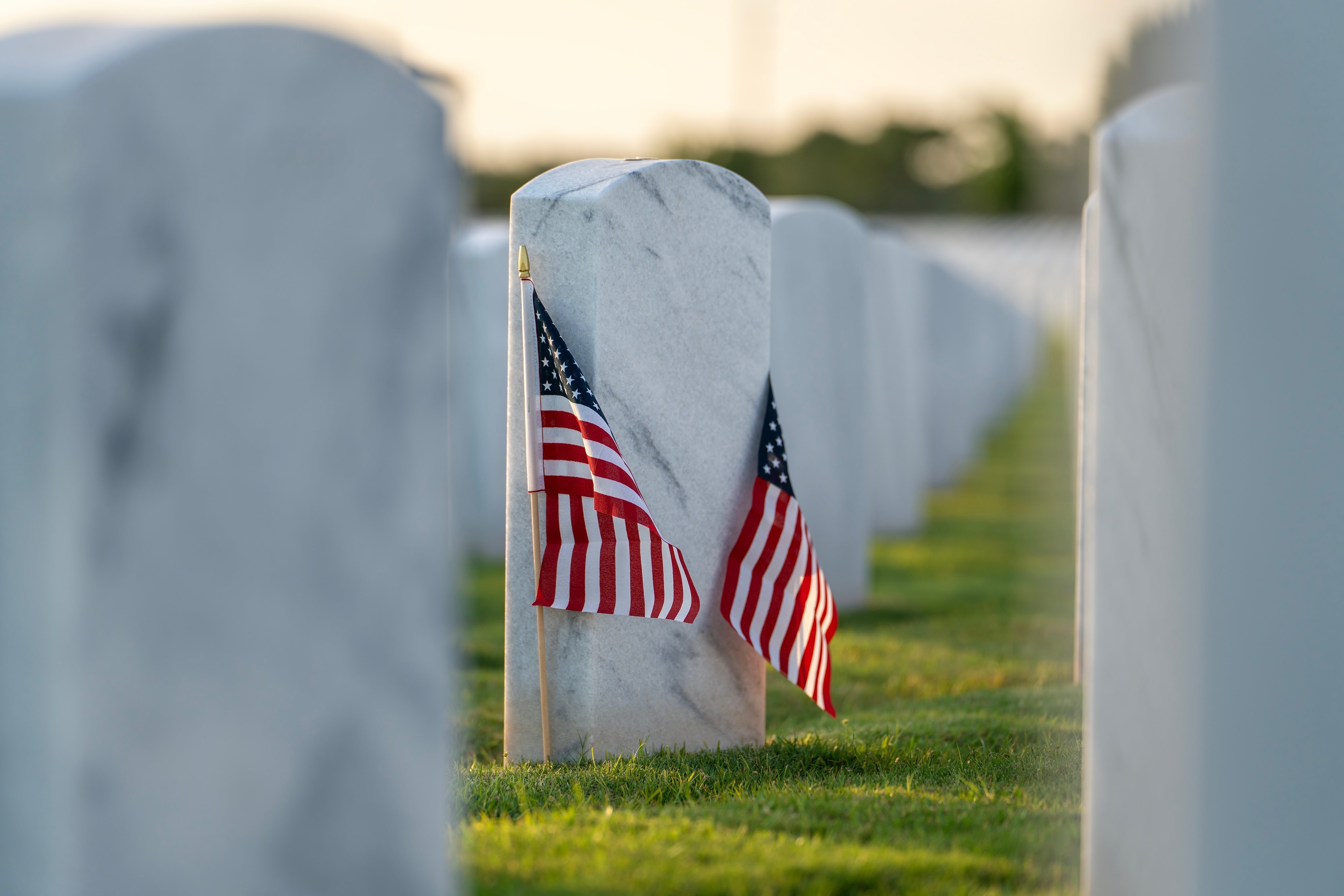
7. U.S. Flags are only authorized on graves during Memorial Day, otherwise they will be removed when found.
8. Wreaths are only permitted on graves in December and January and will be removed no later than January 20th of each year.
9. To preserve the dignity and appearance of the cemetery; statues, shepherds' hooks, vigil lights, breakable objects of any nature, stuffed animals, or pinwheels are not permitted on graves at any time. Items placed on graves cannot exceed 24" in height.
10. The cemetery staff is not responsible for any items placed on graves or retaining them.
For questions pertaining to the floral and decorations regulations, please contact a Cemetery Manager.
Native Montana trees and plants can be purchased for donation to the Montana State Veterans Cemetery Program. If purchased, delivery must be coordinated with the Cemetery Manager to ensure staff is prepared to receive and plant the tree(s) or plant(s).
Contact the Cemetery Manager to determine which trees and/or plants are currently being accepted.
Have you ever been in a cemetery and saw coins laying on a headstone? A coin left on a headstone lets the deceased veteran's family know that somebody stopped by to pay their respect.
A penny means you visited.
A nickel means you and the deceased veteran trained at boot camp together.
A dime means you and the deceased veteran served together in some capacity.
A quarter is very significant because it means that you were there when that veterans died.
The tradition of leaving coins on the headstones of military men and women can be traced to as far back as the Roman Empire. Soldiers would insert a coin into the mouth of a fallen soldier to ensure they could cross the "River Styx" into the afterlife. In the US, this practice became common during the Vietnam War, due to the political divide in the country over the war, leaving a coin was seen as a more practical way to communicate that you had visited the grave than contacting the soldier's family, which could devolve into an uncomfortable argument over politics relating to the war.
What happens to the coins? It is collected from the gravesites monthly and the money is used for cemetery maintenance, the cost of burial for soldiers, or the care for indigent soldiers.
The Corey Shea Act allows parents of a servicemember to be interred with the servicemember if the meet the criteria.
The service member must meet each of the following requirements:
- Died on or after Oct 7, 2001, as a hostile casualty or from training-related injuries.
- Is interred in a VA national or state veterans cemetery, in a gravesite with available space.
- And, has no spouse, surviving spouse, or child who is buried, or who, upon death, may be eligible for burial in a VA national cemetery.
Questions regarding the Corey Shea Act requirements can be directed to the Cemetery Bureau Chief.
Matt Manning
(406) 218-2949